This Live demonstration shows how PyCaret, an open-source low-code machine learning library, can dramatically simplify model training and comparison workflows. PyCaret is democratizing machine learning by empowering anyone to train multiple algorithms and compare their performance with minimal code. Attendees will witness live demonstrations of training various ML algorithms and using automated comparison techniques to select the best performer based on key metrics. Perfect for data scientists, developers, and ML enthusiasts looking to spend less time coding and more time on model analysis and selection.
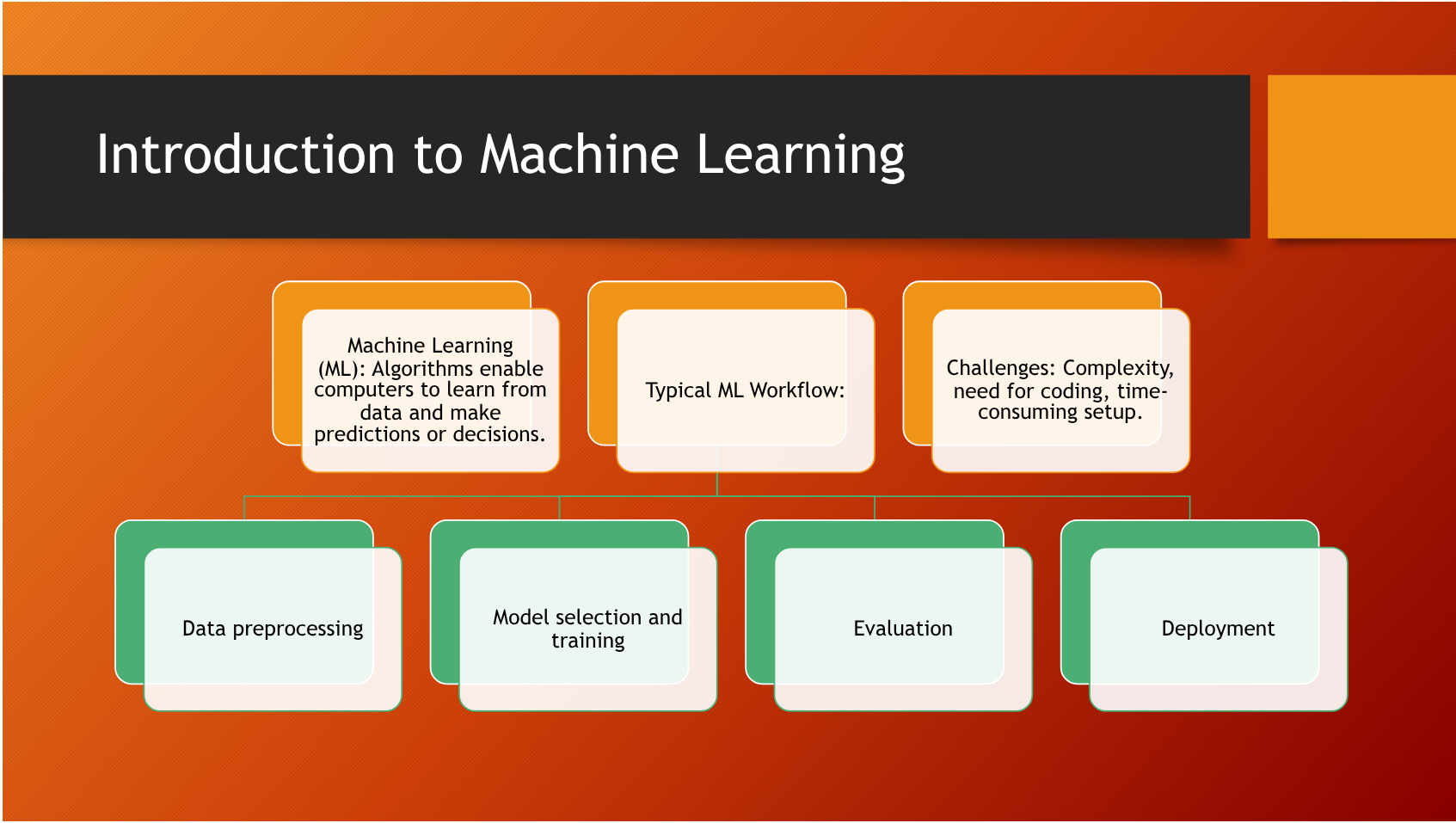
Machine learning workflows often involve repetitive tasks, complex code, and time-consuming model comparisons. PyCaret changes this paradigm by democratizing machine learning - empowering anyone to train multiple algorithms and systematically compare their performance with low-code solutions. With PyCaret’s philosophy of “spend less time coding and more time on analysis,” this library transforms the model selection process by automating training and comparison across multiple algorithms.
- Practical knowledge of automated model training and comparison
- Experience with systematic algorithm evaluation using PyCaret
- Understanding of performance metrics for model selection
- Ready-to-use code examples for multi-algorithm comparison
- Confidence to choose the best ML algorithm for your specific projects
- Basic understanding of Python
- Familiarity with machine learning concepts (helpful but not required)
- No prior PyCaret experience needed
Join us for this fast-paced, demo-heavy session that will transform how you approach machine learning projects!
Manjunath Janardhan
I am a Principal AI Engineer with over two decades of experience transforming complex business challenges through innovative AI solutions. My career is defined by delivering measurable impact, including a patented Intelligent Service Platform that achieved an 80% reduction in operational costs. Currently at MSG Global Solutions, I lead AI development initiatives for SAP Enterprise applications, with a primary focus on SAP Profitability and Performance Management (PaPM). My work involves architecting and implementing enterprise-scale Generative AI solutions for the PaPM Universal Model, where I integrate vector databases with SAP HANA to significantly enhance information retrieval capabilities.
My previous role at GE Healthcare demonstrated my ability to scale AI solutions globally, where I built on-premises Generative AI systems that boosted developer productivity by 40% across international teams. I specialize in combining open-source Large Language Models with Hybrid-RAG and Agentic techniques, leveraging cloud-native architectures across AWS, Azure, and GCP platforms. My portfolio includes high-impact tools such as MICT GPT, CODE GPT, and Service GPT, with Aspire CODE GPT notably reducing development time for the Aspire CT Product by 30%.
My technical foundation encompasses the complete software development lifecycle, from modernizing monolithic systems to microservices using Java and C++, to containerizing applications with Docker and Kubernetes. I maintain active contributions to open-source NLP projects, reflecting my commitment to advancing the broader AI community.
Professional development remains central to my practice. I regularly engage with the AI community through conferences, workshops, webinars, and hackathons, recently developing a working prototype for a Socratic DSA Tutor. As an industry speaker, Medium blogger, and content creator, I share practical insights on AI implementation strategies and emerging technologies, focusing on mentoring the next generation of AI engineers while driving innovation in enterprise AI applications.
Outline
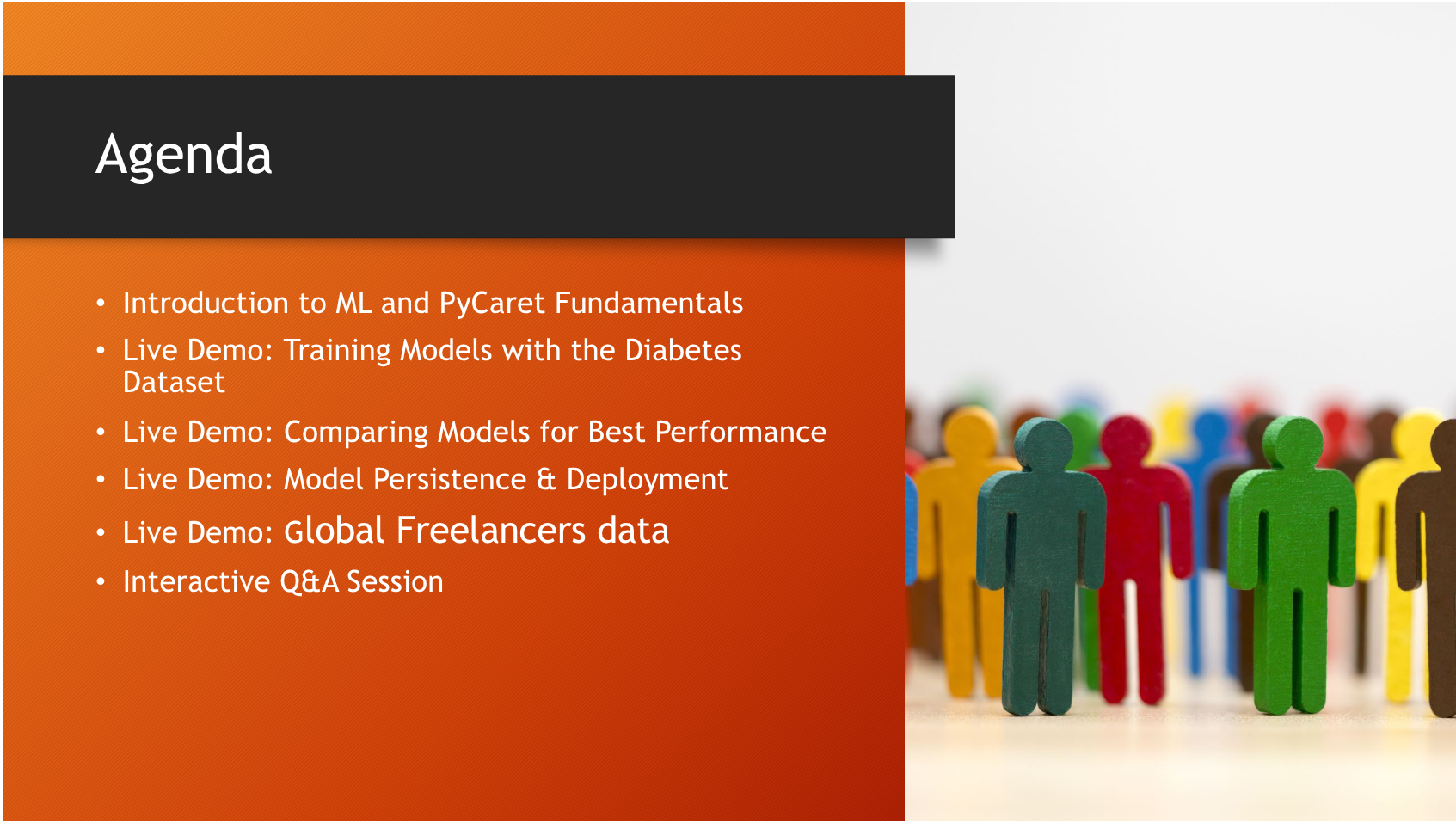
- ML and PyCaret Fundamentals (13 mins)
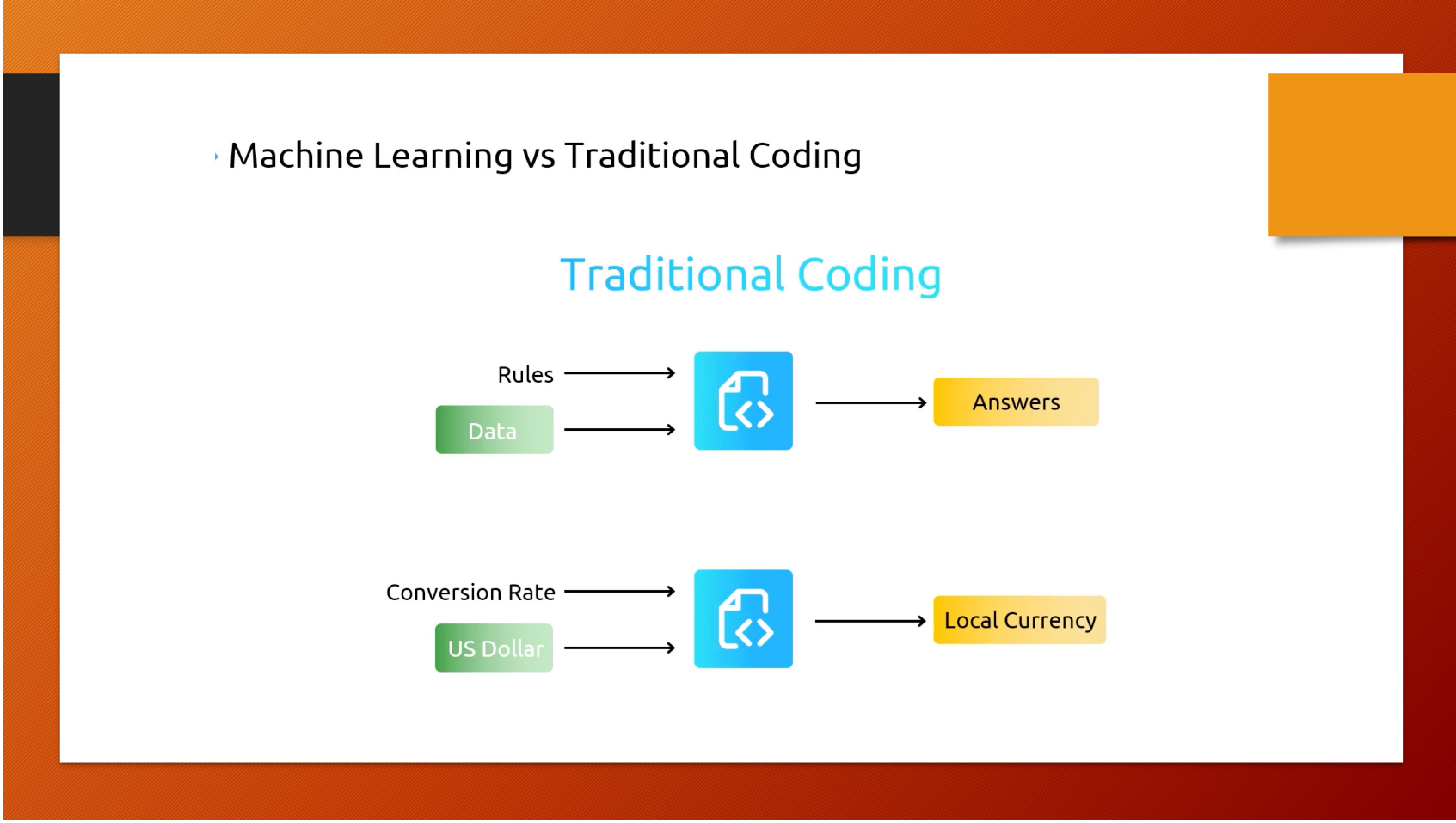
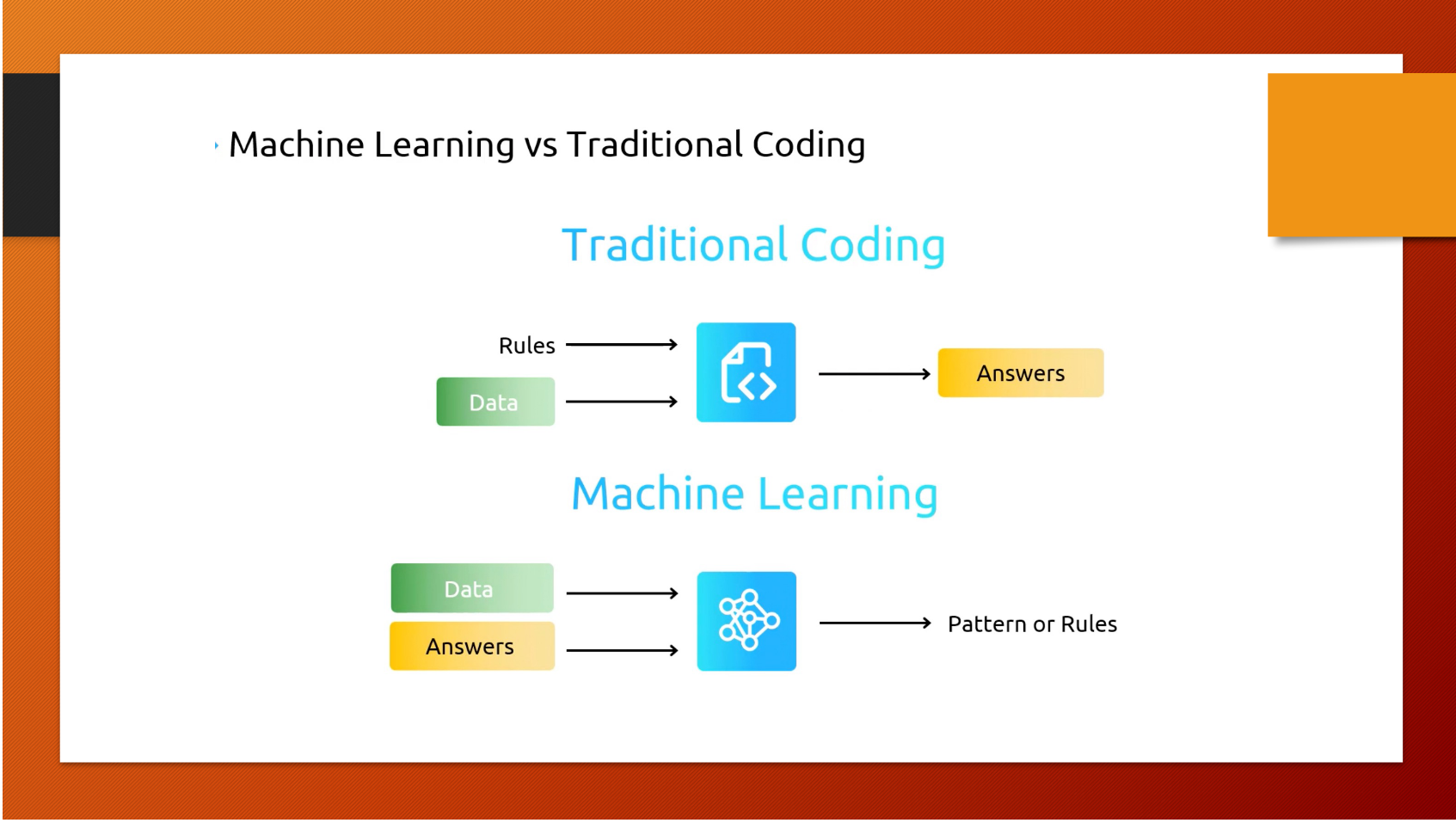
- What is Machine Learning, Machine Learning Algorithms and workflows
- What is PyCaret
- Live Demo: Multi-Algorithm Training & Comparison (10 mins)
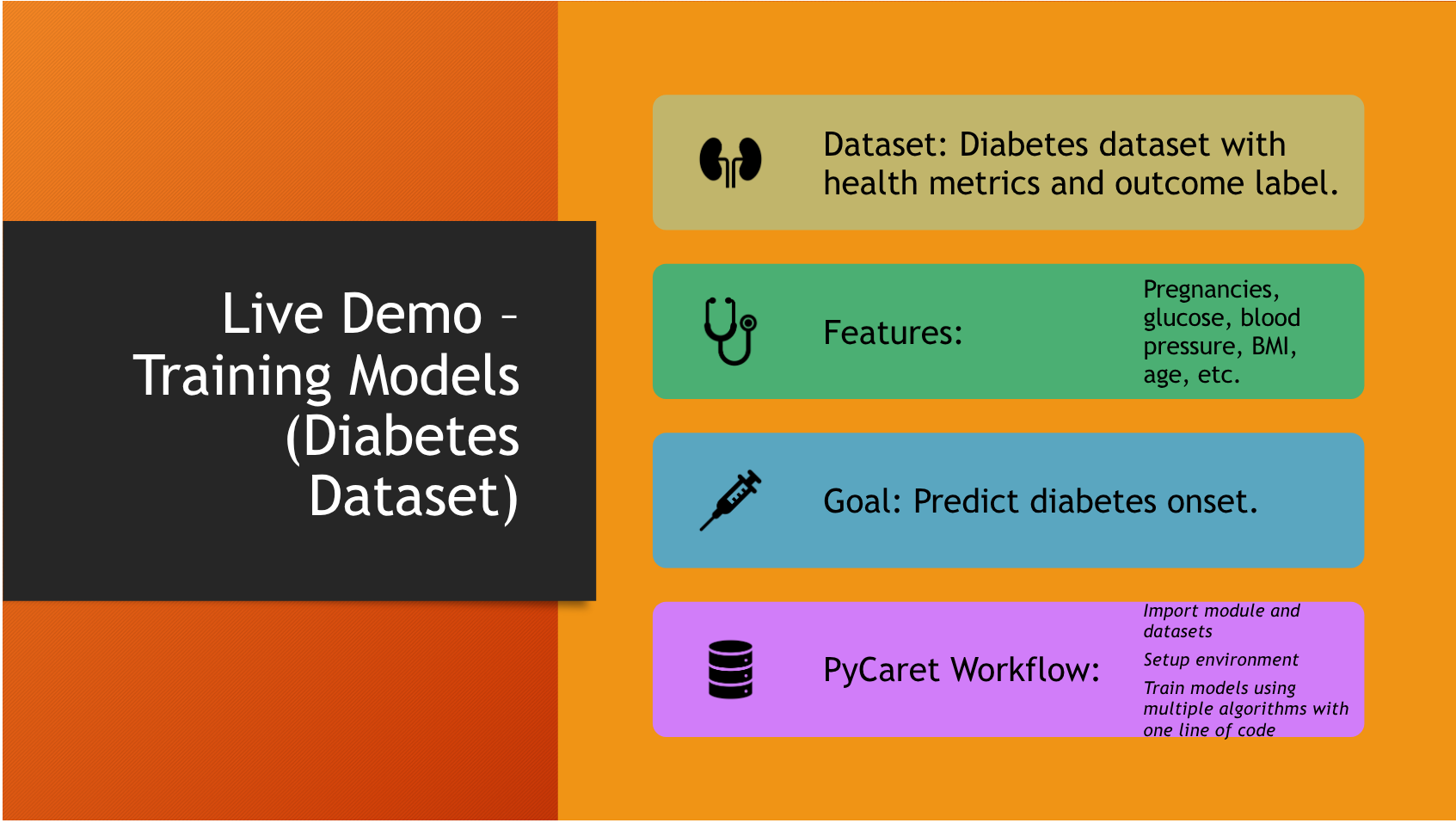
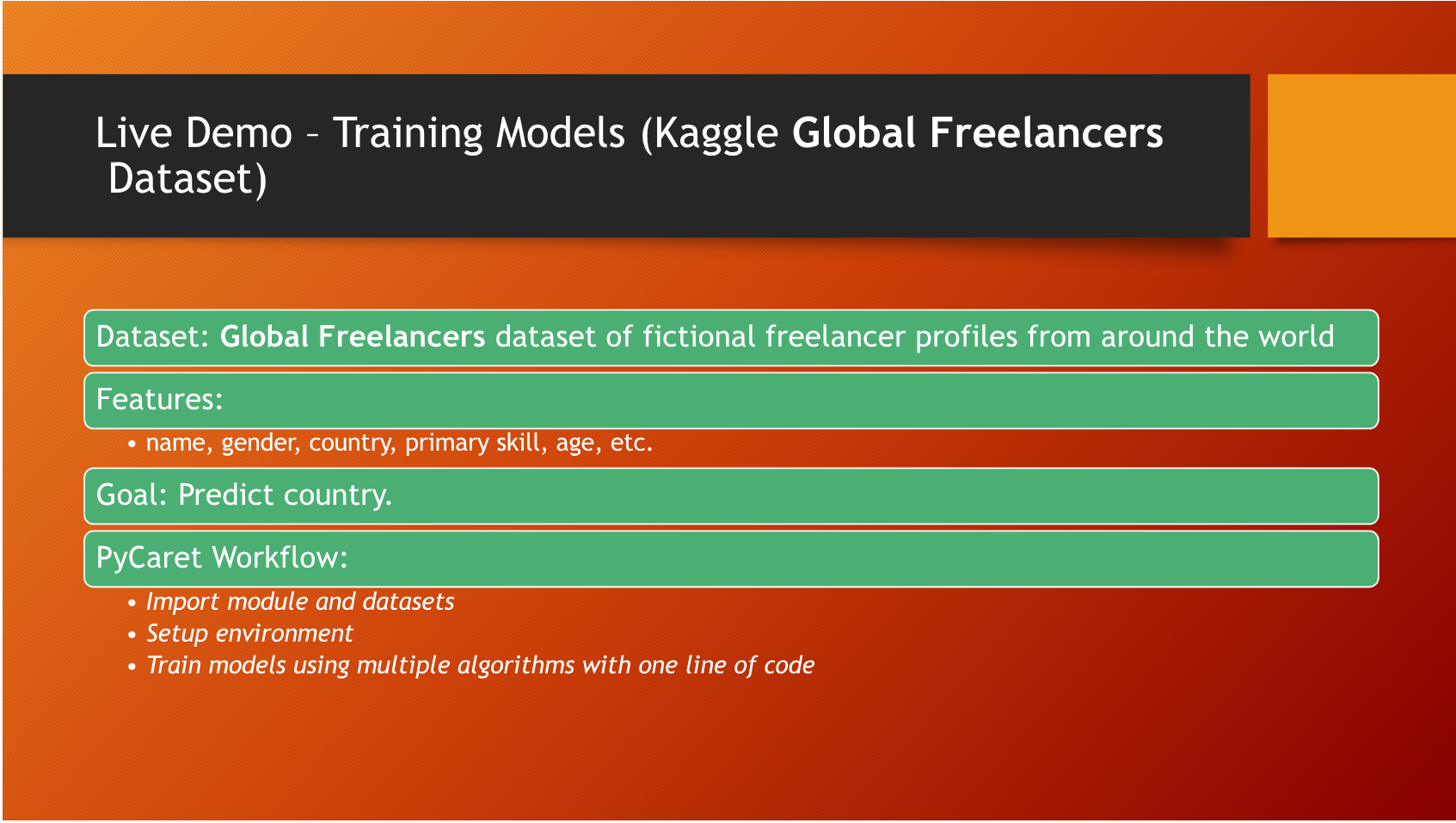
- Hands-on demonstration using the Diabetes Dataset
- Training multiple algorithms simultaneously with minimal code
- Automated model comparison using various performance metrics
- Real-time exploration of model performance visualizations
- Selecting the best performer based on key evaluation metrics
- Wrap-up & Resources (2 mins)
- Key takeaways and next steps
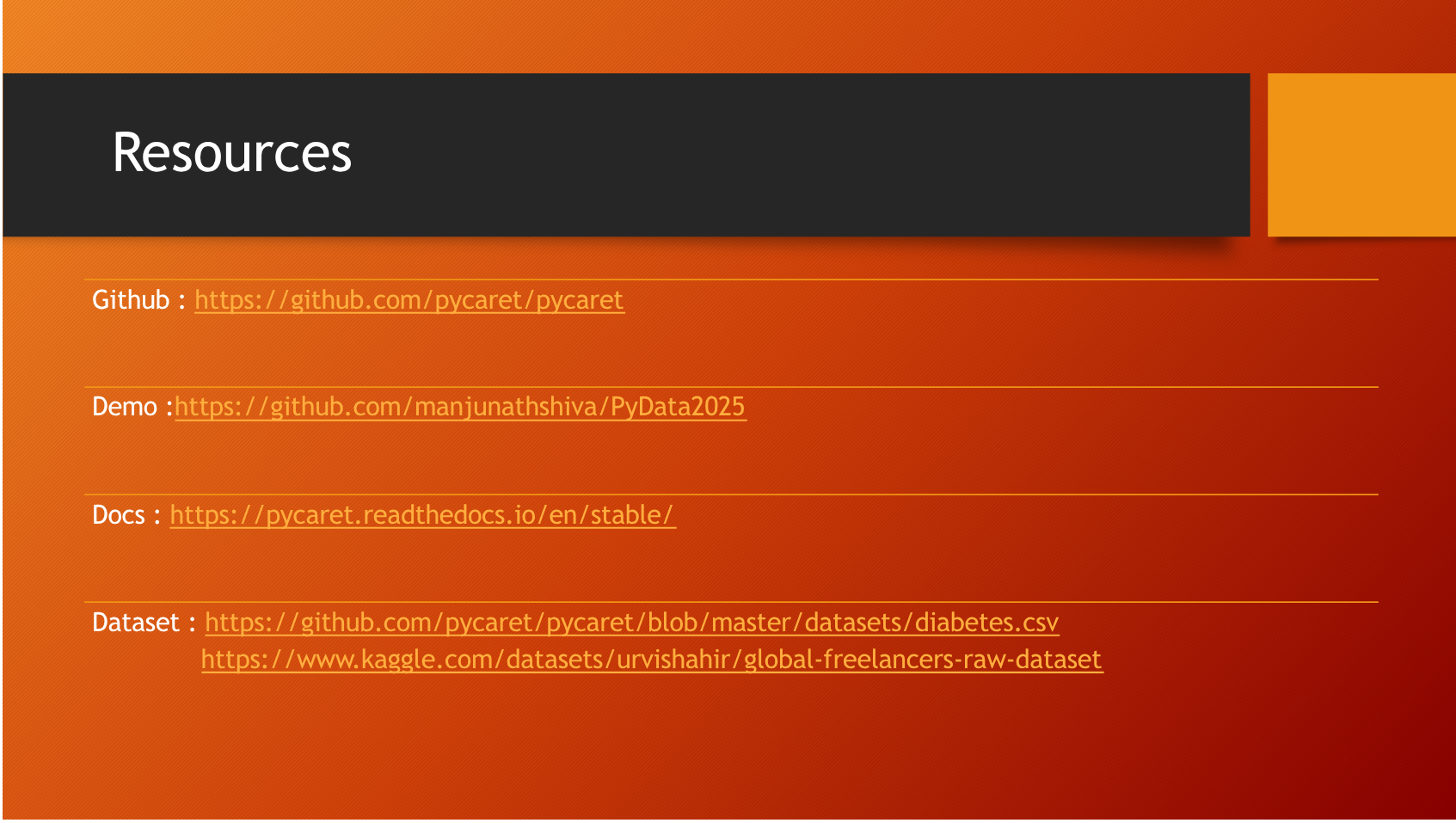
- Access to GitHub repository with slides and demo notebooks
- Q&A (5 min)
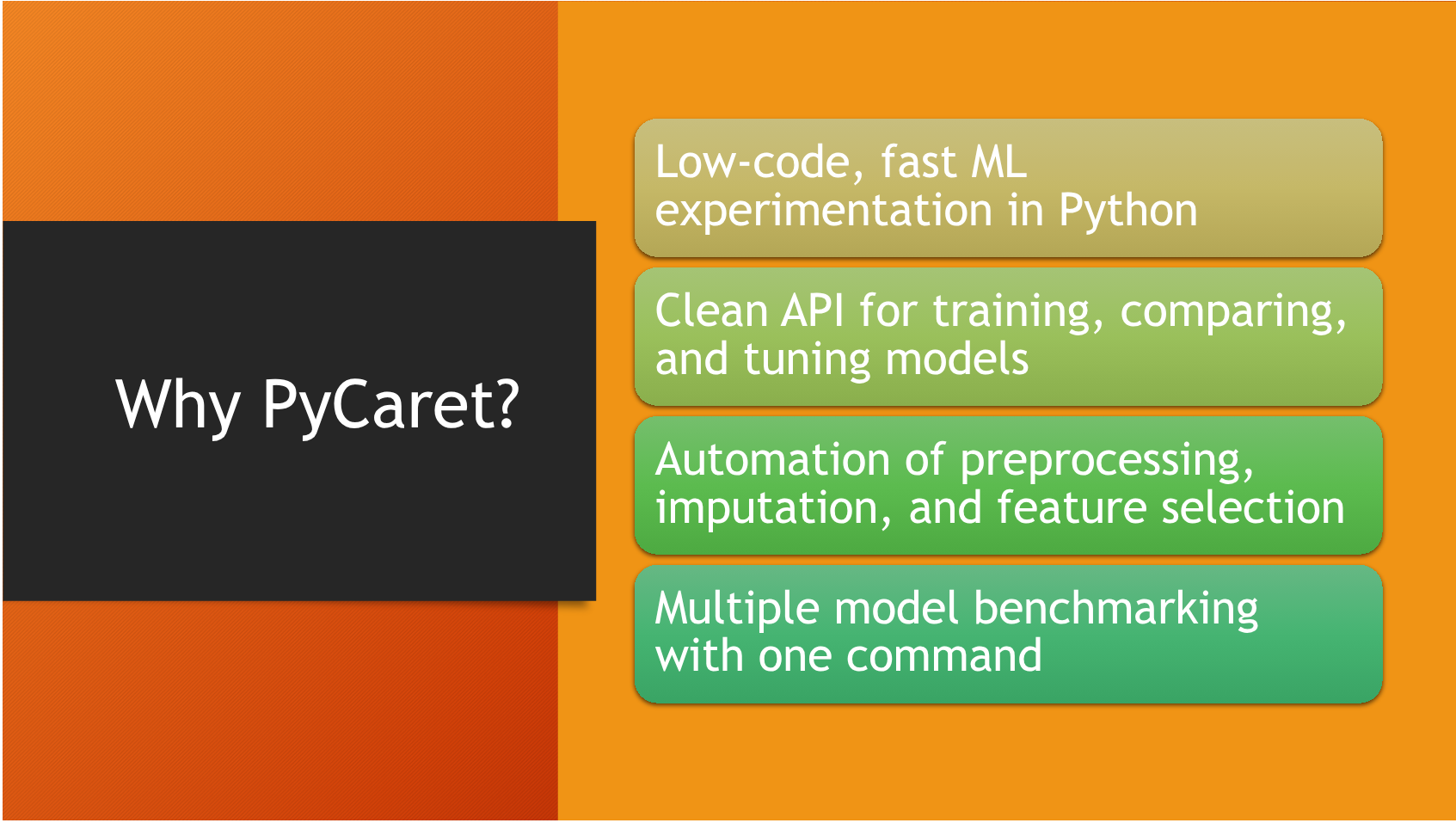
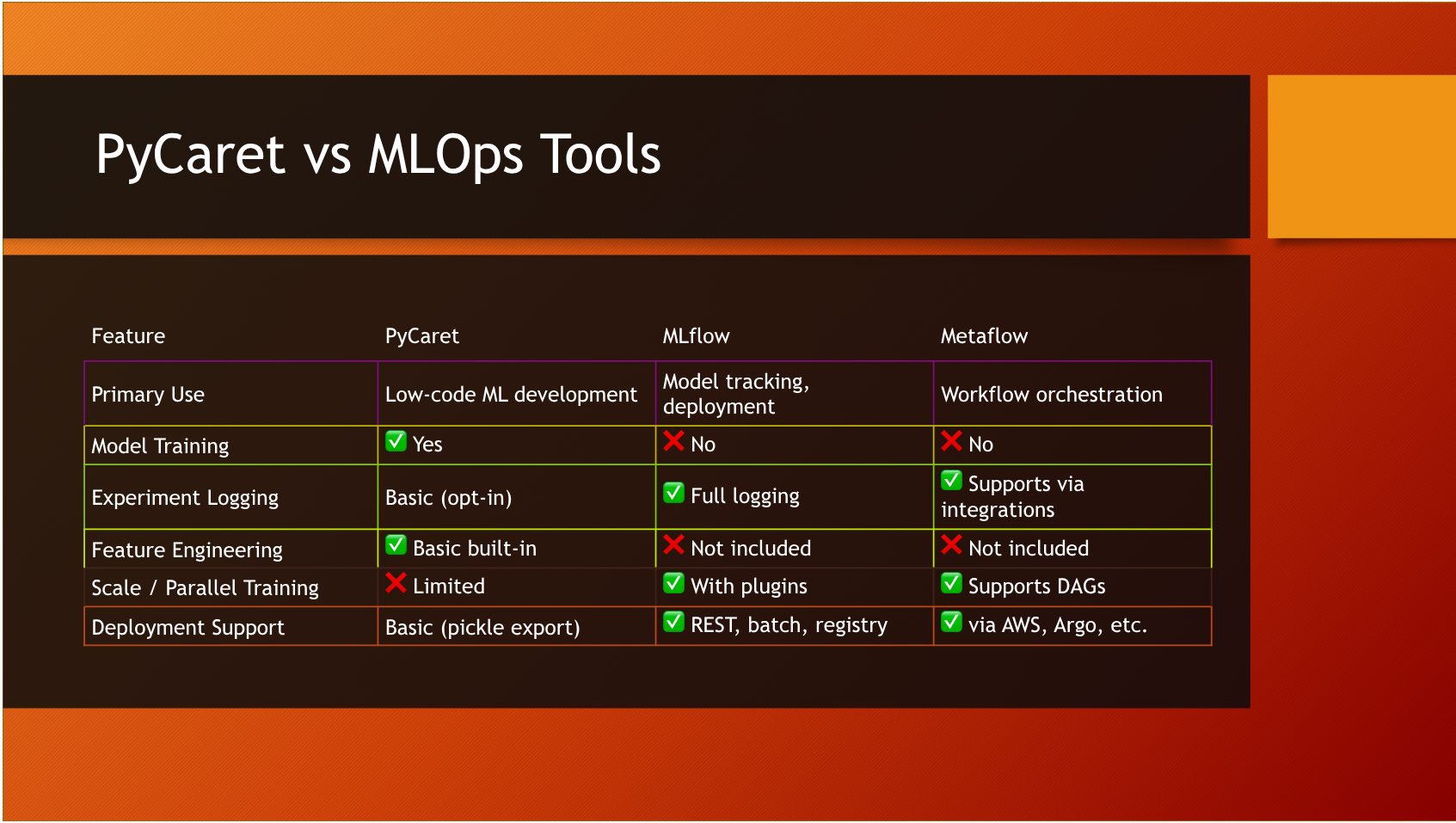
- Low-code, fast MLexperimentation in Python
- Clean API for training, comparing,and tuning models
- Automation of preprocessing,imputation, and feature selection
- Multiple model benchmarking with one command
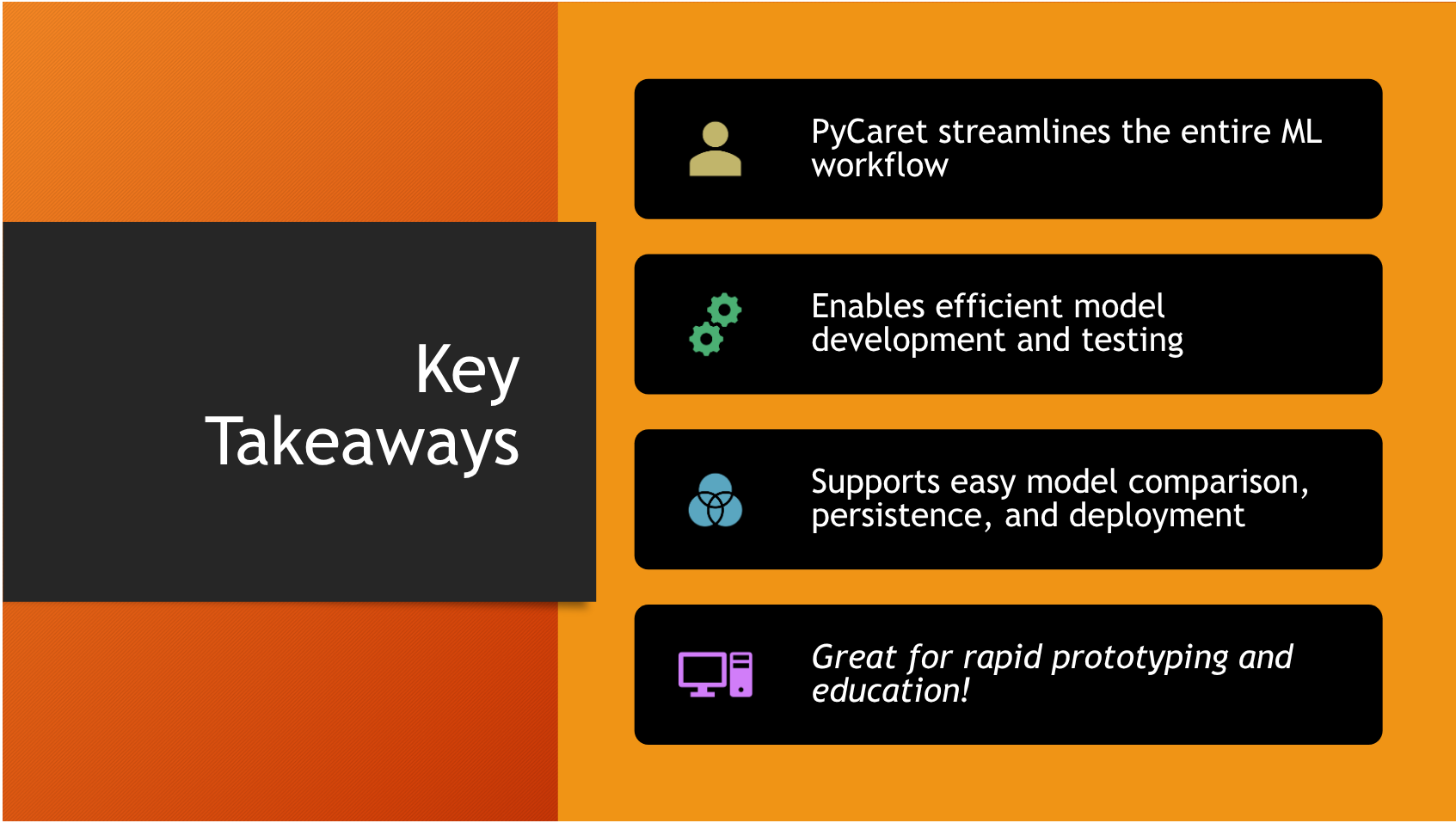
- PyCaret streamlines the entire MLworkflow
- Enables efficient model development and testing
- Supports easy model comparison,persistence, and deployment
- Great for rapid prototyping and education!

Reflections
Pycaret looks like a better solution for rapid prototyping of machine learning models compared to building everything from scratch. This seems to be another option of moving towards productionizing machine learning models starting with a notebook.
Citation
@online{bochman2025,
  author = {Bochman, Oren},
  title = {Automating {ML} with {PyCaret:} {Train} \& {Compare}
    {Multiple} {Models} to {Find} the {Best} {Performer}},
  date = {2025-12-11},
  url = {https://orenbochman.github.io/posts/2025/2025-12-11-pydata-pycaret/},
  langid = {en}
}